
Power Station Portability & Recharge Scorecard
A transparent comparison of how much battery and inverter capability manufacturers package into each pound—and how large the battery is relative to its maximum listed solar input.
Three metrics, three different winners
We deliberately avoid a single composite score because buyers value portability, inverter power and recharge capability differently.
Jackery Explorer 1000 v2
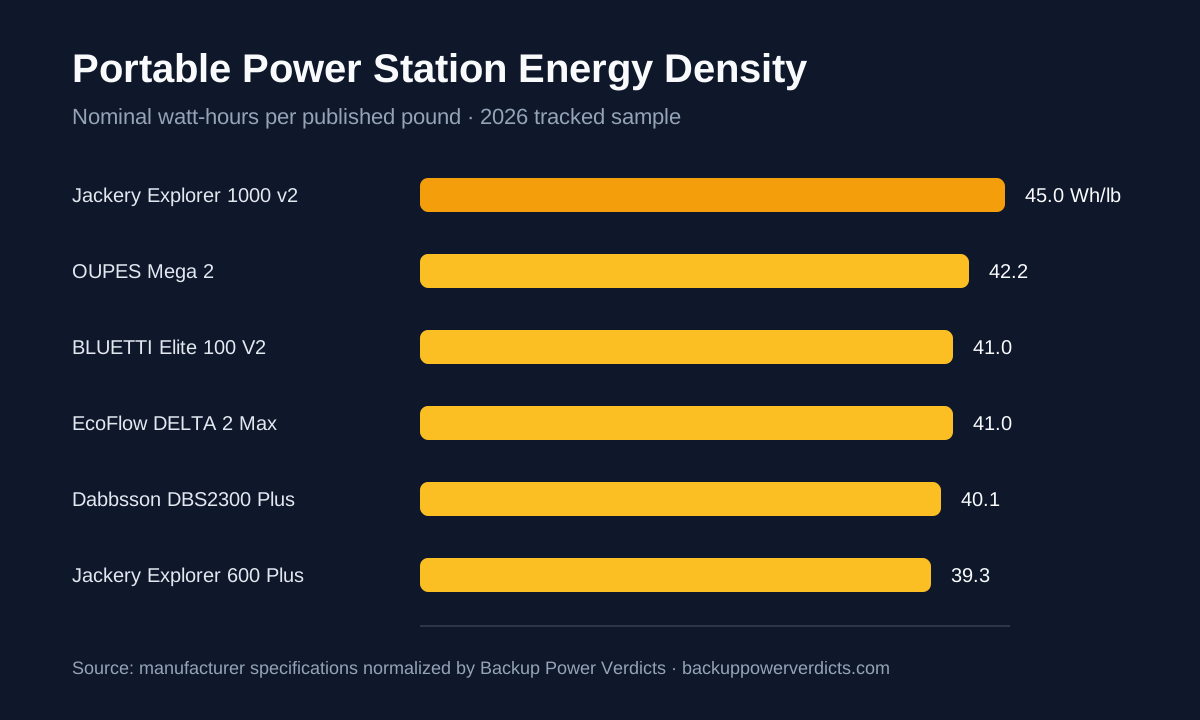
45.0 Wh/lb of nominal battery capacity per published pound.
BLUETTI Elite 100 V2
72.0 W/lb of rated continuous AC output per pound.
OUPES Mega 2
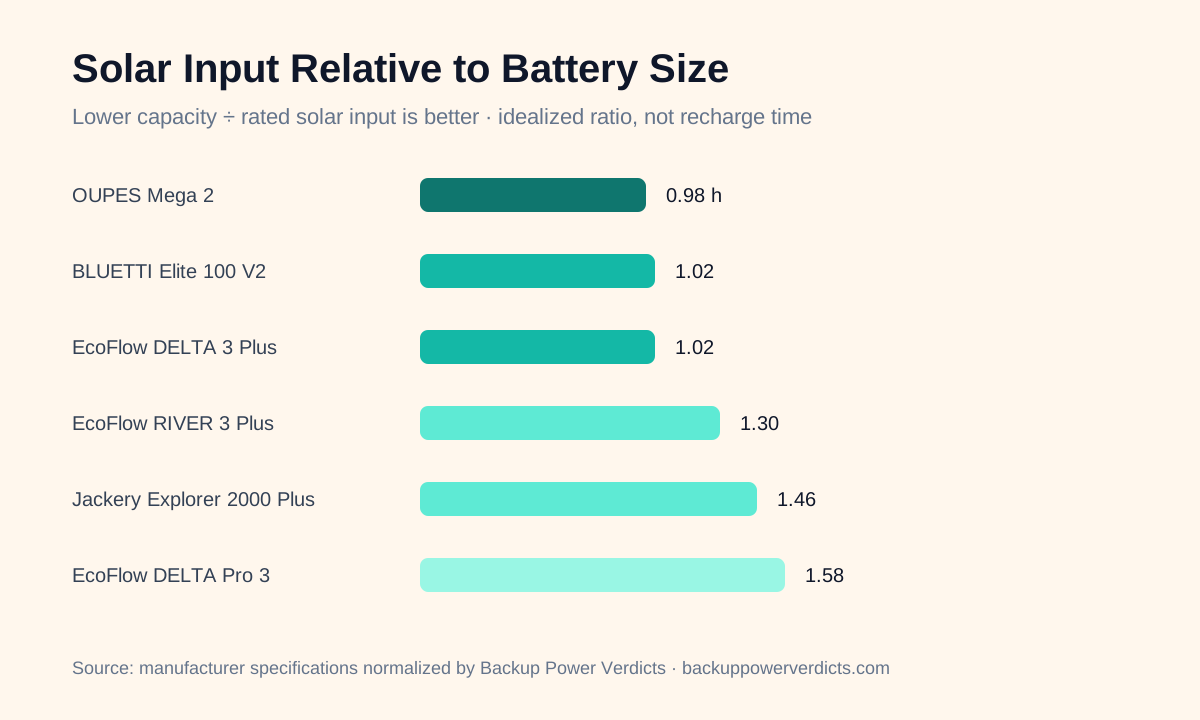
0.98 capacity-to-solar hours, the lowest ratio in the sample before real-world losses.
Charts publishers can cite or embed
Each SVG includes source attribution and can be opened directly for editorial use.
16 current models on the same yardstick
Lower capacity-to-solar ratio is better for relative recharge capability; higher Wh/lb and W/lb indicate more storage or inverter output per pound.
| Model | Capacity | Output | Solar | Weight | Wh/lb | W/lb | Cap ÷ Solar |
|---|---|---|---|---|---|---|---|
| EcoFlow RIVER 3 Plus | 286 Wh | 600 W | 220 W | 10.4 lb | 27.5 | 57.7 | 1.30 h |
| Jackery Explorer 600 Plus | 632 Wh | 800 W | 200 W | 16.1 lb | 39.3 | 49.7 | 3.16 h |
| BLUETTI Elite 100 V2 | 1,024 Wh | 1,800 W | 1,000 W | 25 lb | 41.0 | 72.0 | 1.02 h |
| EcoFlow DELTA 3 Plus | 1,024 Wh | 1,800 W | 1,000 W | 27.6 lb | 37.1 | 65.2 | 1.02 h |
| Anker SOLIX C1000 | 1,056 Wh | 1,800 W | 600 W | 28.4 lb | 37.2 | 63.4 | 1.76 h |
| Jackery Explorer 1000 v2 | 1,070 Wh | 1,500 W | 400 W | 23.8 lb | 45.0 | 63.0 | 2.67 h |
| BLUETTI AC180 | 1,152 Wh | 1,800 W | 500 W | 35.3 lb | 32.6 | 51.0 | 2.30 h |
| VTOMAN FlashSpeed 1500 | 1,548 Wh | 1,500 W | 400 W | 41.4 lb | 37.4 | 36.2 | 3.87 h |
| OUPES Mega 2 | 2,048 Wh | 2,500 W | 2,100 W | 48.5 lb | 42.2 | 51.5 | 0.98 h |
| EcoFlow DELTA 2 Max | 2,048 Wh | 2,400 W | 1,000 W | 50 lb | 41.0 | 48.0 | 2.05 h |
| BLUETTI AC200L | 2,048 Wh | 2,400 W | 1,200 W | 62.4 lb | 32.8 | 38.5 | 1.71 h |
| Jackery Explorer 2000 Plus | 2,042.8 Wh | 3,000 W | 1,400 W | 61.5 lb | 33.2 | 48.8 | 1.46 h |
| Dabbsson DBS2300 Plus | 2,330 Wh | 2,200 W | 800 W | 58.15 lb | 40.1 | 37.8 | 2.91 h |
| Mango Power Power E | 3,533 Wh | 3,000 W | 2,000 W | 100.1 lb | 35.3 | 30.0 | 1.77 h |
| Anker SOLIX F3800 | 3,840 Wh | 6,000 W | 2,400 W | 132 lb | 29.1 | 45.5 | 1.60 h |
| EcoFlow DELTA Pro 3 | 4,096 Wh | 4,000 W | 2,600 W | 113.54 lb | 36.1 | 35.2 | 1.58 h |
What these metrics actually mean
Wh/lb = nominal battery capacity divided by published unit weight. It is a storage-portability metric, not measured usable energy.
W/lb = rated continuous AC output divided by published unit weight. It rewards inverter capability per pound but says nothing about surge duration or thermal throttling.
Capacity-to-solar ratio = nominal battery capacity divided by maximum listed solar input. A lower value means the station can theoretically accept more panel power relative to its battery size. It is not a real recharge-time promise because solar availability and charging losses vary.
We do not combine these into one “best overall” score. A lighter camping unit, a high-output home-backup unit and a fast-solar system serve different jobs. The raw metrics let readers apply their own priorities.
How to use this scorecard
Use Wh/lb when carrying weight matters, W/lb when you need strong AC output without excessive mass, and the solar ratio when long-outage recharge capability is important. Then verify ports, voltage, surge behavior, expandability and compatibility separately.
Citation and reuse
Publishers may cite the scorecard with attribution to Backup Power Verdicts and a link to this study. The downloadable CSV and SVG graphics are provided for reporting and independent analysis.